The Rise of Decentralized Social Media and the Messy, Hopeful Search for Governance
Let’s be honest. For many of us, the big social media platforms feel less like town squares and more like shopping malls with unpredictable security guards. You’re never quite sure of the rules, a mysterious algorithm decides who hears you, and one day your favorite stall might just… vanish.
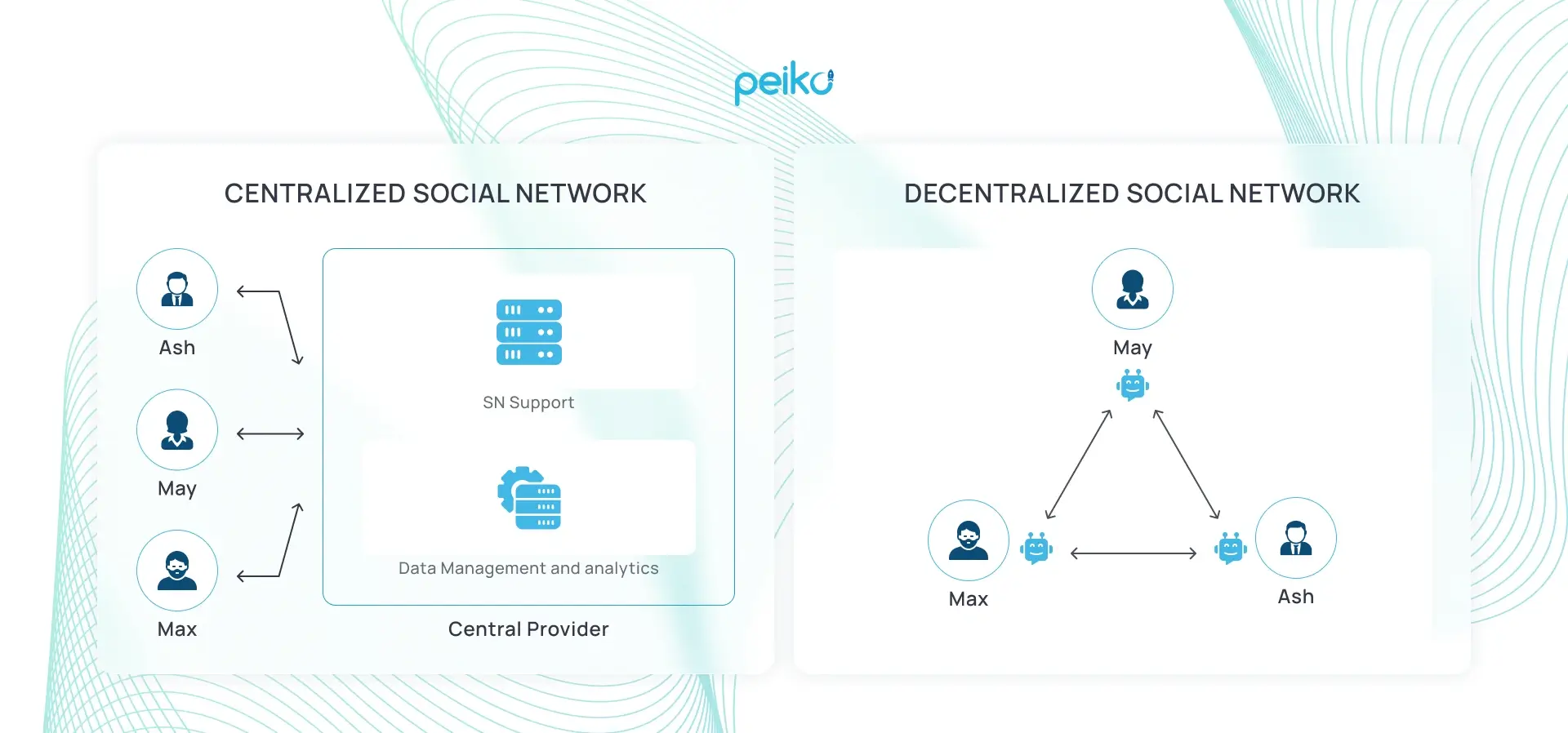
That creeping sense of digital unease is fueling a quiet revolution. Enter decentralized social media platforms. Think of them less as single, monolithic apps and more as protocols—like email. No single company owns email; you can choose your provider (Gmail, Outlook, your own server) and still communicate with anyone. That’s the core idea here, and it’s reshaping not just how we connect, but more importantly, how we govern our online spaces.
Why Decentralization? It’s Not Just About Tech
The push isn’t just from tech purists. It’s a response to very real pain points: content moderation bias, data harvesting, opaque algorithms, and the ever-present threat of de-platforming. When control is centralized, a handful of executives make decisions for billions.
Decentralized social networks, built often on blockchain or similar protocols, flip this script. Your identity and data aren’t stored on a company’s server; they live with you. You can move between different “client” apps without losing your network, like using different email apps to access the same inbox. The power dynamic shifts. But here’s the million-dollar question: if no central authority is in charge, who makes the rules? How do you stop spam, harassment, or worse? Well, that’s where governance models get fascinating—and messy.
The Governance Puzzle: Who Gets the Keys?
Without a CEO calling the shots, these platforms have to invent new ways to govern. It’s a giant social experiment playing out in real-time. The models emerging are as varied as human communities themselves.
1. The Code is Law (Mostly) Model
Some platforms, especially in the blockchain-native world, aim to minimize human governance. Rules are encoded directly into the protocol’s smart contracts. Think of it like a vending machine: the rules are set (insert $2, get a soda), and it operates automatically.
The upside? Transparency and predictability. The downside? It’s incredibly rigid. A vending machine can’t judge context or show mercy. This model struggles with nuanced content moderation—the very thing it often seeks to improve upon.
2. The Federated Model: A Network of Neighborhoods
This is the most popular model right now, powering networks like Mastodon (part of the Fediverse). Imagine a constellation of independent servers, each with its own moderators and rules (like different clubs in a city). You join a server that aligns with your values.
Each server admin governs their own “instance.” They can block other servers, creating a kind of community-led content filtering. It’s beautifully granular. But it can also lead to fragmentation and, honestly, a confusing experience for new users. Finding your “home” server feels a bit like picking a neighborhood before you’ve ever visited the city.
How Decisions Actually Get Made: A Peek Under the Hood
Okay, so we have models. But in practice, how do decisions—like changing core features or resolving disputes—happen? Here’s where it gets concrete.
| Governance Mechanism | How It Works | Platform Example | The Human Trade-off |
| Token-Based Voting | Users hold platform tokens to vote on proposals. More tokens = more voting power. | Many blockchain-based platforms (e.g., DeSo ecosystems) | Democratic in theory, but can lean toward plutocracy—rule by the wealthiest holders. |
| Reputation-Based Systems | Influence is earned through positive contributions, time in the network, or peer endorsements. | Seen in some research protocols and emerging models | Rewards good actors, but defining “reputation” is itself a governance challenge. |
| Benevolent Dictator & Core Teams | A founder or small core team guides development, often with community input. | Common in early-stage projects (e.g., Mastodon’s initial phase) | Efficient, but centralizes power in a few individuals—a tension for a decentralized ideal. |
| Forking as Governance | If you disagree with the direction, you copy the code and start your own network. | The ultimate move in open-source projects | Pure freedom of exit, but can split communities and dilute network effects. |
You see the pattern, right? Every solution introduces a new set of questions. It’s the eternal balance between freedom and order, played out with code and community guidelines.
The Real-World Hurdles: It’s Not All Utopia
Let’s not romanticize this. The path to decentralized governance is littered with challenges. For one, the user experience can be clunky. Managing cryptographic keys is not as easy as remembering a password. Then there’s moderation at scale. A federated server with a volunteer admin can be overwhelmed by a coordinated attack.
And perhaps the biggest hurdle: discovery and the network effect. The value of a social network is in its people. Starting from zero is hard. These platforms often feel quiet compared to the roaring stadiums of centralized apps. Growth is slow, organic. That’s not necessarily bad—it can foster healthier communities—but it’s a real barrier to mainstream adoption.
What This All Means for the Future of Online Talk
So, where does this leave us? The rise of decentralized social media isn’t really about building a perfect system. Honestly, perfect systems don’t exist where humans are involved. It’s about choice, agency, and resilience.
It means you might one day own your social graph—your list of connections—as securely as you own a bitcoin. It means communities can set their own norms, rather than adhering to a global, one-size-fits-all policy that pleases no one. It means a single point of failure (or censorship) is much harder to achieve.
The governance models are the most exciting part, because they’re forcing us to re-imagine digital citizenship. We’re experimenting with digital town halls, reputation-based councils, and fluid borders between online groups. It’s messy, iterative, and profoundly human.
In the end, decentralized social media offers something simple yet radical: the reminder that our digital spaces are things we can build and govern together, not just rent from a distant landlord. The tools are there. The blueprints are being drawn, erased, and redrawn every day. The real experiment is us.