

The Rise of Decentralized Social Media Protocols and the Fight for Your Data
You know that feeling. You spend years building a community, sharing your art, your thoughts, your life. Then, one day, the algorithm changes. Your posts vanish. Or maybe the platform itself just… shifts. It’s like building a house on rented land where the landlord can change the rules—or evict you—on a whim.
That’s the central tension of today’s social web. But a quiet revolution is brewing, one that flips the entire model on its head. It’s not about new apps with flashy filters. It’s about a fundamental shift in infrastructure: the rise of decentralized social media protocols and the real, tangible promise of user data ownership.
What Exactly Are We Talking About? Protocols vs. Platforms
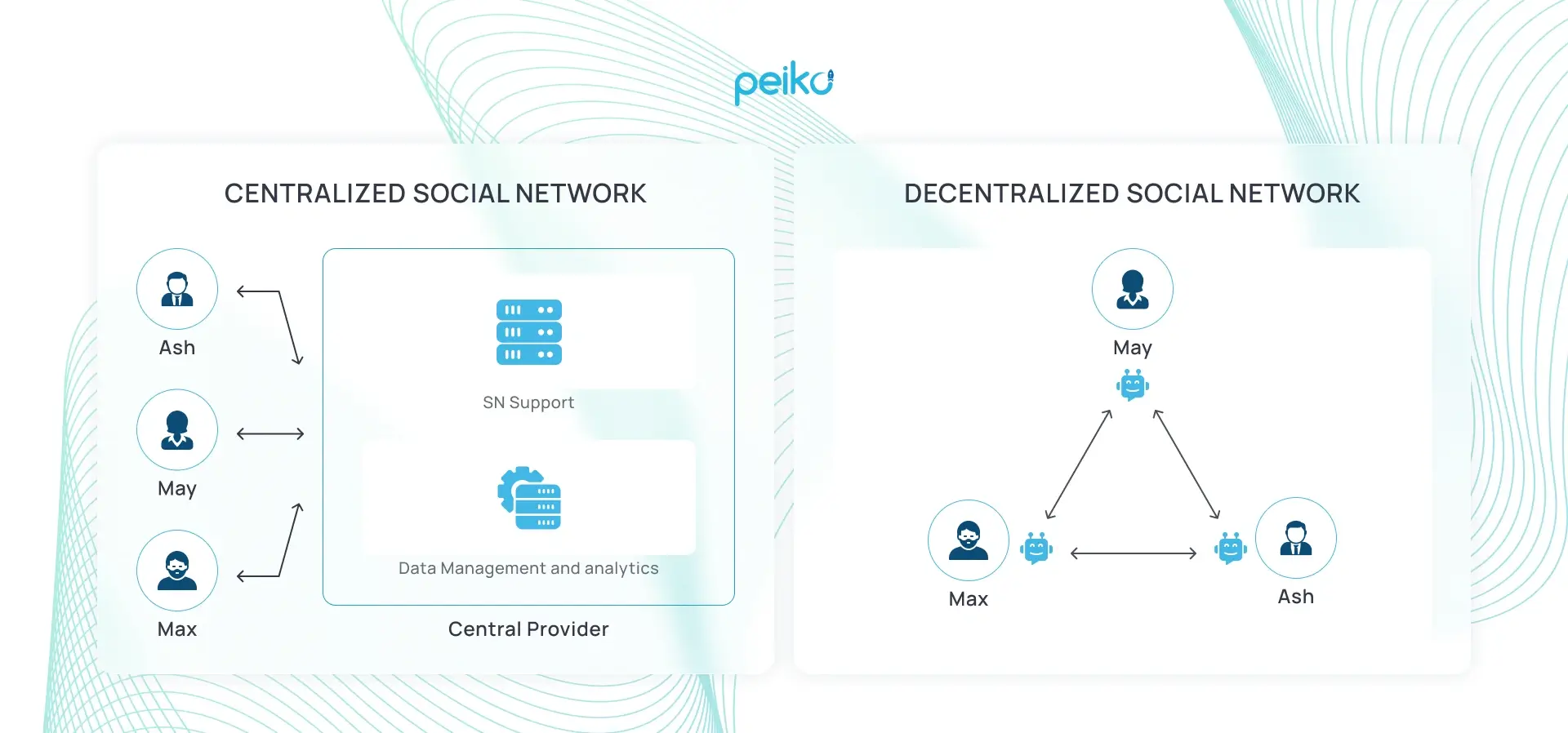
Let’s clear the air first. A decentralized social protocol is basically a set of open-source rules for how social networking should work. Think of it like email. No single company owns email. You can use Gmail, Outlook, or your own server, and still message anyone, anywhere. The protocol (SMTP) is the common language.
Now, contrast that with a centralized platform like Facebook or X. They own the entire stack—the code, the servers, your data, the rules. You’re a guest in their walled garden. They control what you see, how you connect, and they monetize your attention and information.
Decentralized social media aims to be more like email. Protocols like ActivityPub (which powers Mastodon and others), AT Protocol (from Bluesky), and Farcaster provide the underlying grammar. Different apps (often called “clients” or “interfaces”) can then be built on top, all able to interoperate. You could, in theory, use one app to follow and interact with friends on a completely different app. Wild, right?
The Core Promise: Owning Your Digital Self
So why does this technical shift matter? Honestly, it comes down to ownership and agency. In a decentralized social media landscape, your identity and your data aren’t locked to a single company’s database.
Here’s the deal:
- Portable Identity: Your social graph—your followers, your follows—can move with you. Switching apps doesn’t mean starting from zero.
- Data Sovereignty: You choose where your data lives. Maybe on a personal server, or a community-run server you trust. The platform doesn’t own it; you grant it access.
- Algorithmic Choice: Hate the feed you’re seeing? You could potentially swap out the algorithm or curate it yourself, rather than being fed what maximizes engagement at all costs.
- Censorship Resistance: This one’s nuanced. It’s less about “anything goes” and more about layered moderation. No single entity has a global kill switch. Individual servers or apps set their own rules, and users have more freedom to choose a community that fits their norms.
The Current Landscape: It’s Not Just One Thing
The movement is already here, taking different shapes. It’s messy, experimental, and honestly, a bit confusing at first glance. But that’s the point—it’s a ecosystem, not a monoculture.
| Protocol/Network | Key Example(s) | Brief Analogy |
| ActivityPub (The Fediverse) | Mastodon, Pixelfed, PeerTube | Like a federation of independent towns (servers), each with its own mayor, but all using the same postal system to communicate. |
| AT Protocol | Bluesky | Aims to be more like a global directory (a big, searchable phone book) where you can easily find anyone, but still own your identity. |
| Farcaster | Clients like Warpcast | Emphasizes “sufficient decentralization.” Think of it like a blockchain-based address book for your social connections, with apps built on top. |
Each approach has trade-offs. The Fediverse (ActivityPub) is wildly decentralized but can feel fragmented. Bluesky’s AT Protocol seeks a smoother user experience, which sometimes means a bit more centralization in the short term. It’s all a balancing act.
The Real-World Hurdles (It’s Not All Sunshine)
Look, the vision is compelling. But migrating from the sleek, addictive convenience of centralized platforms is a massive challenge. The pain points are real:
- Onboarding Friction: Choosing a server? Understanding cryptographic keys? For the average user, it’s a hurdle. The UX needs to become invisible.
- Network Effects: Social media is worthless without your people. The “empty restaurant” problem is real in early decentralized networks.
- Content Moderation: This is the big one. Distributed responsibility can mean inconsistent enforcement and a heavier burden on individual server admins. Solving abuse at scale is an unsolved puzzle here.
- Monetization & Sustainability: If you’re not the product, who pays? Server costs, development—it’s a real question. Some models include paid memberships, premium features, or creator-centric tools.
Why This Matters Now More Than Ever
This isn’t just tech for tech’s sake. The drive toward decentralized social networking is a direct response to very current anxieties. People are tired of algorithmic whiplash, data breaches they have no control over, and the feeling that their online presence is just… fragile. The trend is moving from “free services in exchange for your data” to “user-controlled data as a fundamental right.”
And for creators, the value proposition is huge. Imagine actually owning the connection to your audience. You could take your subscriber list from one platform to another, or use different apps to offer different experiences—all while maintaining that direct relationship. It turns followers into a true asset, not just a metric on a dashboard you don’t control.
A Glimpse of What’s Next
So where is this all going? The future likely isn’t a single “Twitter-killer.” It’s an interconnected mesh of specialized spaces. You might use one sleek app for short-form text, a different one for photos that automatically respects your licensing preferences, and yet another for long-form video—all under the same identity, with your data flowing only where you permit.
We’ll see more data ownership models emerge, perhaps where you license your anonymized data on your own terms. We’ll see protocols that bake in better moderation tools from the start. The innovation will be in the plumbing, not just the faucet.
The rise of these protocols is less about a sudden overthrow and more about a gradual rewiring. It offers a path back to what made the early web feel so empowering: a sense of agency, true community, and the freedom to build without asking for permission. It’s a reminder that the network can belong to its participants, not just its landlords. And that’s a future worth exploring, one protocol at a time.

